
Oyster Information
Mission
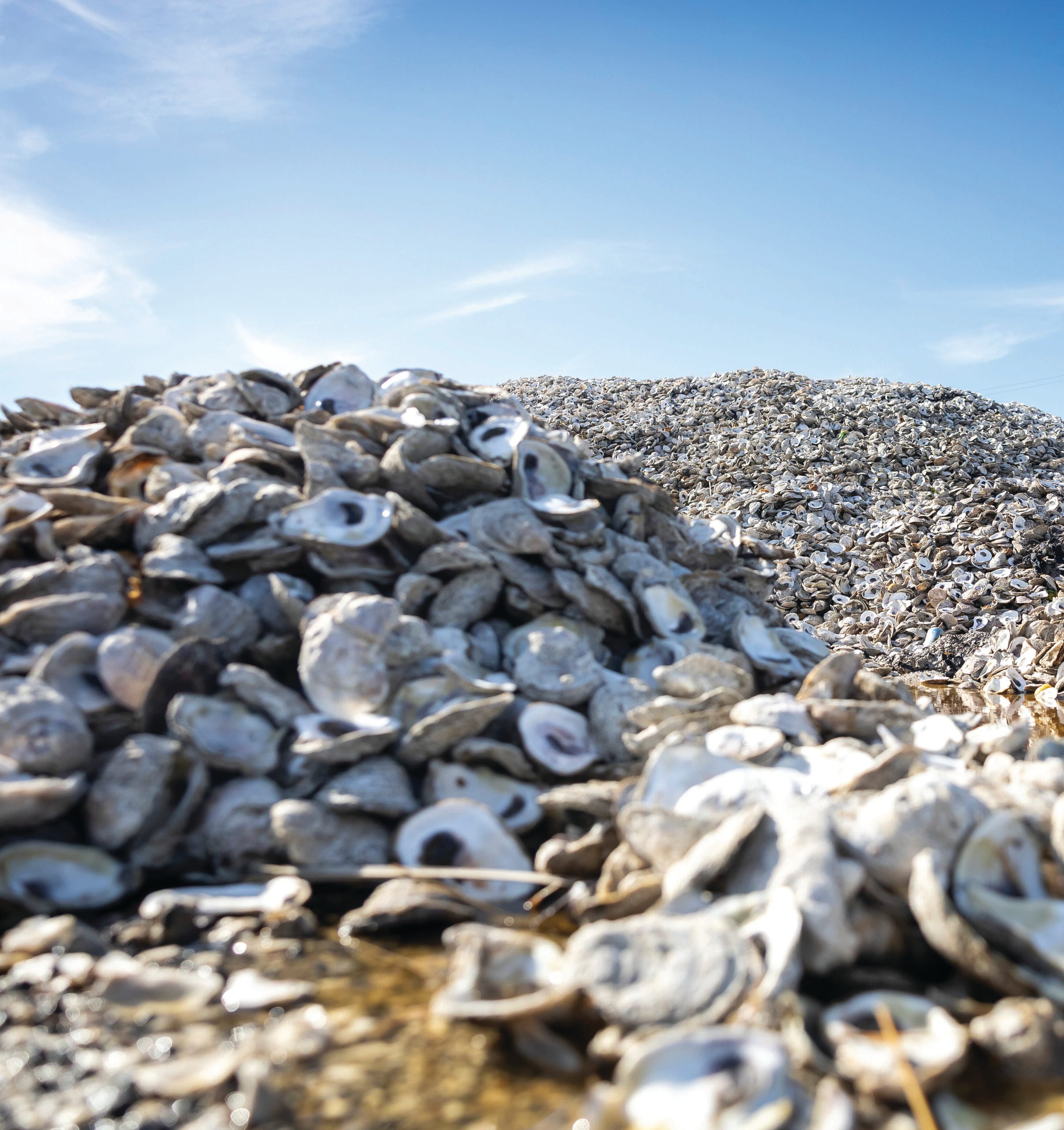
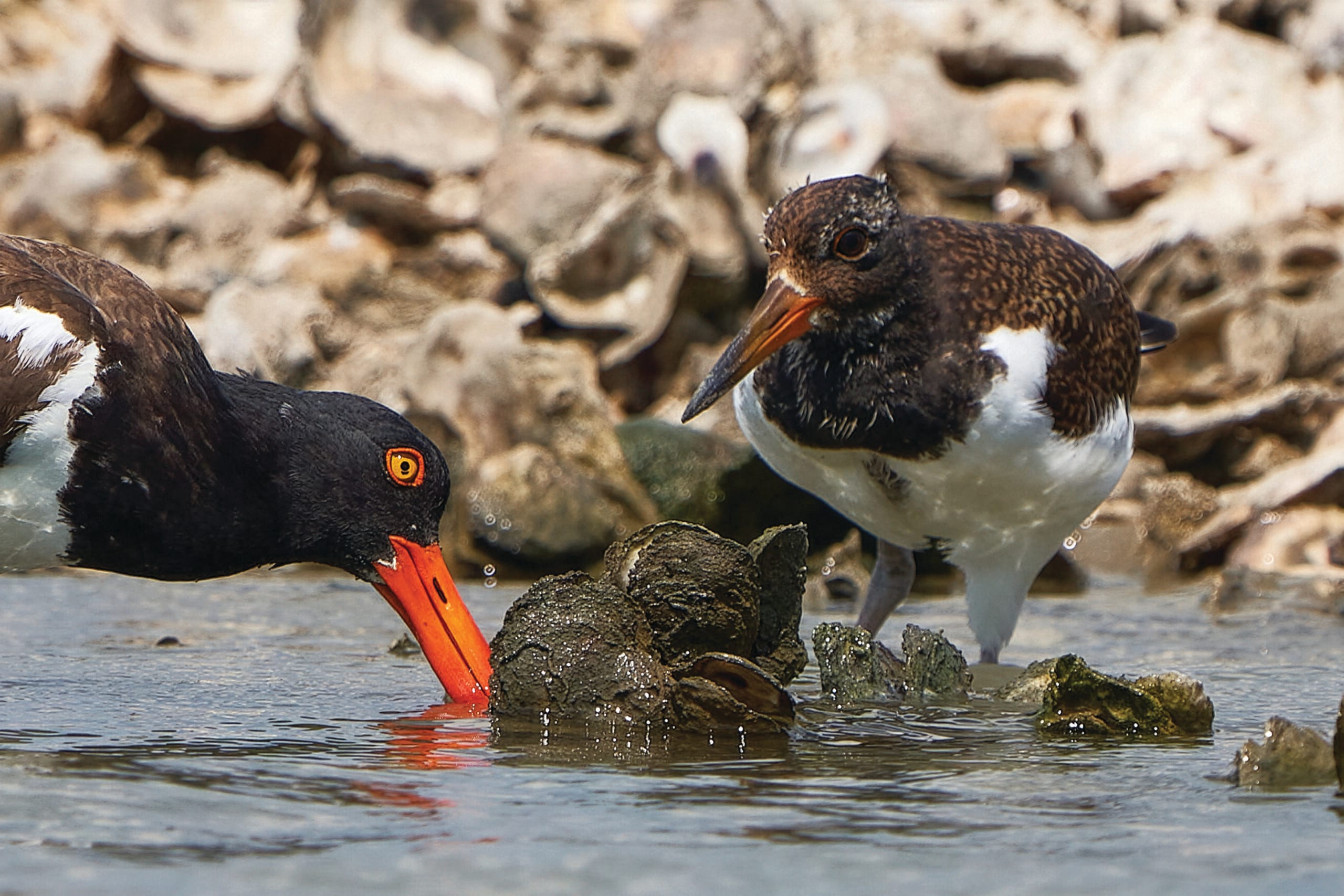
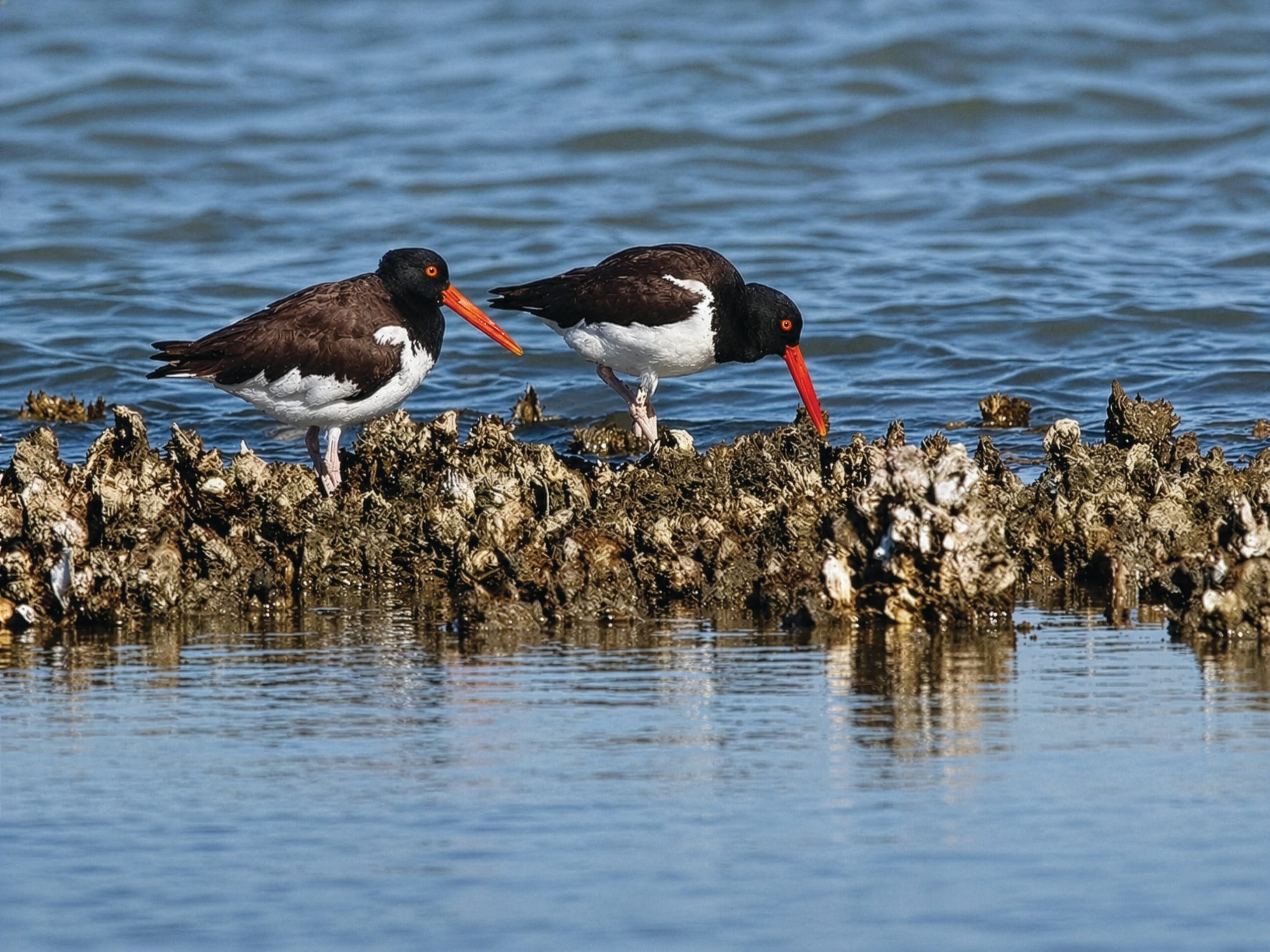
Coastal Preservation and Restoration (CPR) is dedicated to protecting Texas’s public reefs and restoring those that are damaged or degraded. Oyster reefs are vital guardians of the coastal ecosystems: they shield saltwater marshes from erosion, provide nurseries that sustain diverse marine and bird populations, and support more than 300 species of marine life and 200 species of birds. Just as importantly, oyster reefs are powerful natural water filters, improving water clarity and allowing sea grasses to thrive.
Texas’s bays and oyster reefs stand at a tipping point after decades of overharvesting, destructive dredging, and habitat degradation. The loss of reef structure is accelerating shoreline erosion, diminishing vital nurseries for shrimp, crabs, and fish, reducing rookeries and habitat for migratory birds, and weakening the natural water filtration that keeps bays clear and sea grasses healthy.
The rapid and accelerating destruction of our Texas oyster reefs not only undermines our coastal bays’ ecological functions, but it also threatens: (i) the quality of life for millions of Texans; (ii) a unique and foundational part of our state’s culinary and cultural heritage; (iii) and billions of dollars of tourism contribution to the Texas economy. What is happening to Texas oyster reefs is preventable, reversible, and misunderstood and requires an urgent intervention.
Launched in 2025 in response to this issue, Coastal Preservation and Restoration (CPR) is dedicated to protecting Texas’s public oyster reefs and restoring those that are damaged or degraded. Oyster reefs are vital guardians of a sustainable and thriving coastal ecosystem: they shield saltwater marshes from erosion, provide nurseries that sustain over 300 marine species, sustain migratory birds along key flyways, and improve water clarity to enable sea grasses to thrive. CPR seeks to build on good work underway by helping (i) raise public awareness and demand for action (ii) accelerate the elimination of unsustainable harvest methods (iii) expand and accelerate the implementation of sustainable harvest (iv) significantly scale and accelerate oyster reef restoration along the entire Texas coastal bay system.
Why Oysters Matter
Nature’s infrastructure: small creatures, big impact
Shoreline protection
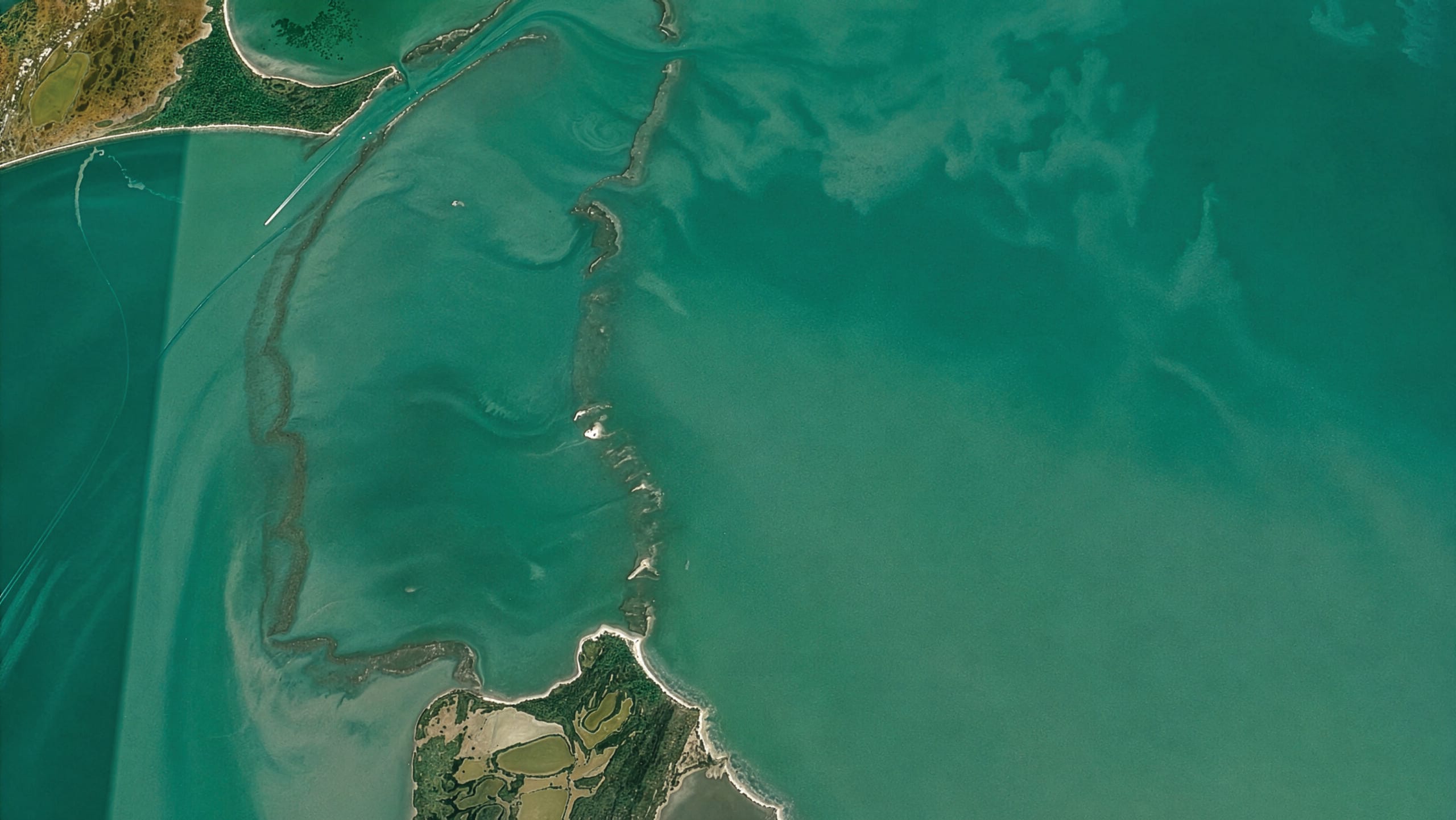
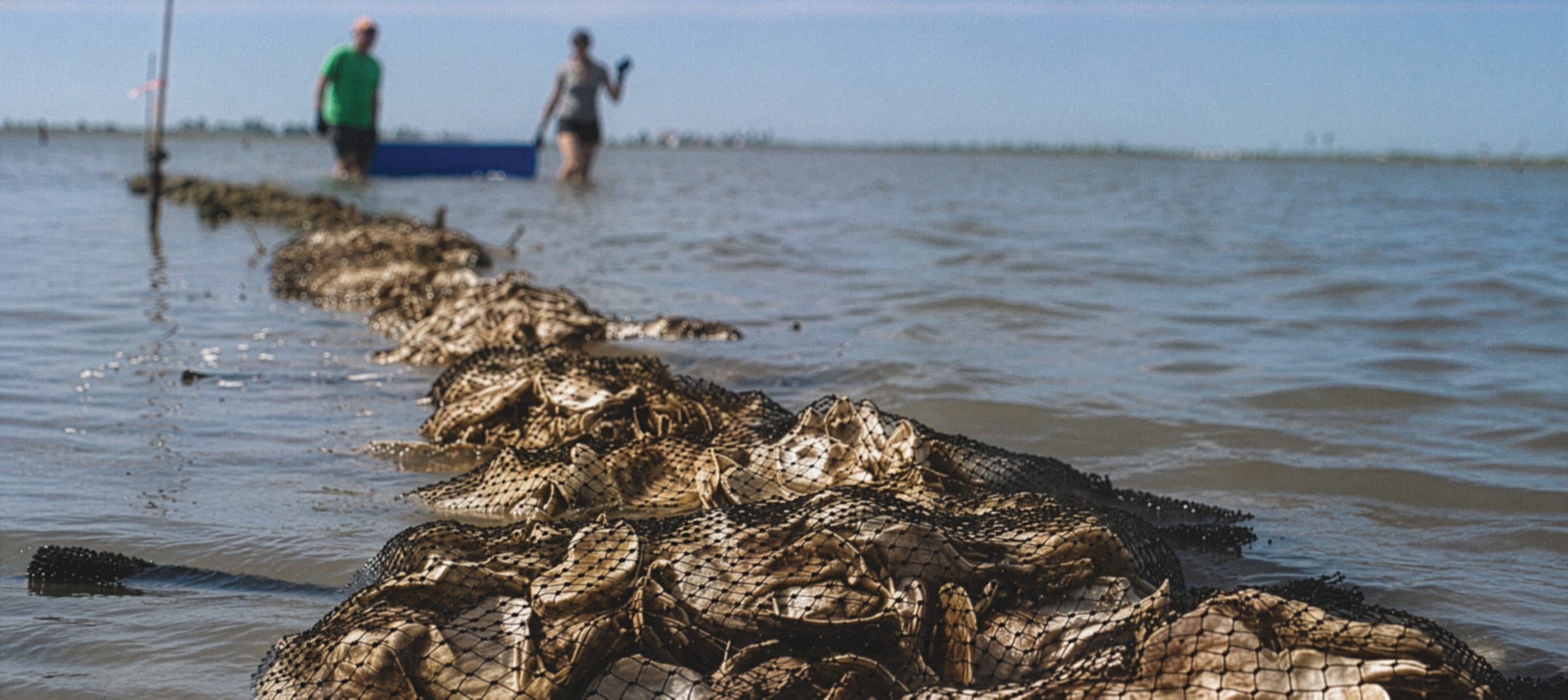
Oyster reefs act as living seawalls that grow land. They blunt wave energy before it reaches salt marshes and bay shorelines - they are Texas’s first line of defense. When reefs fail, shoreline erosion accelerates and saltwater marshes disappear.
Biodiversity
Reefs are nurseries that sustain shrimp, crabs, and fish and provide rookeries and habitat for migratory birds along key flyways. They support more than 300 species of marine life and 200 species of birds.
Water filtration
Oysters are prolific filter feeders, they are “nature’s kidneys.” They strain algae, nitrogen, and silt from the water, improving clarity so sea grasses can thrive and helping prevent algal blooms by removing excess nutrients.
Quick facts
• 300+ marine species supported by oyster reef habitat
• 200+ bird species that use Texas reef and marsh systems
• Texas coastal saltwater fishing generates $2B annually
• Texas coastal tourism generates $5.4 billion annually
• Functional habitat: 300 species, rookeries and nurseries, and migrating birds
Data sources used in CPR briefing materials: habitat — Harte Research Institute (HRI); financial — Texas Aquatic Science, Chapter 11.
Shoreline protection and Texas coastal erosion
Living seawalls that grow land
Texas coastal bays have among the highest erosion rates in the U.S. Destruction of oyster reefs in Texas coastal bays contributes to and accelerates loss of land.
According to the Texas General Land Office, the average erosion rate along Texas’ 367-mile coastline is 4.1 feet per year. But 64% of the Texas coast is eroding at an average rate of 6 feet per year (some locations are losing 30 feet a year), while only about 7.9% of the coastline is accreting. On average, the state loses 235 acres of shoreline each year.
- The highest rate of erosion, 46.2 feet/year, was recorded along the 2.5-mile long section of Matagorda Island.
- Relative sea-level rise, local circulation patterns, high intensity storms, and lack of sediment supply, combined with human activities along developed areas of the barrier island, have all contributed to this chronic erosion, although the exact measurements of each contributing factor is still largely unquantified.
Relative sea-level rise
The combination of global sea-level rise and local land subsidence is effectively raising water levels along the Texas coast, eating away at shores. Galveston’s tide gauge has recorded high relative sea-level rise (about 6+ mm/yr) due largely to subsidence, and in parts of Houston-Galveston Bay, land sank over 10 feet in the 20th century from groundwater withdrawal. This subsidence has drowned wetlands (over 26,000 acres of Galveston Bay marsh converted to open water) and made shores more vulnerable to wave attack.
Source: https://pubs.usgs.gov/fs/fs-110-02/pdf/FS_110-02.pdf
Source: https://pubs.usgs.gov
Companion USGS record (added so a full paper can be opened from the incomplete pubs.usgs.gov citation):
Coastal structures and development
Ironically, some measures taken to protect property have worsened erosion locally. Seawalls and bulkheads, such as the famous Galveston Seawall (built after the 1900 storm), defend infrastructure behind them but tend to cause the beach in front to disappear (by reflecting wave energy and preventing the natural landward migration of the shoreline).
On-the-ground examples from CPR materials
- San Jose Island shoreline erosion analysis (2004–2024) documents substantial retreat along bay and gulf edges.
- Comparative imagery from 2009 and 2019 shows loss of emergent shell beach along Third Chain of Islands and nearby flats. Source: Google Earth; 2009 Texas General Land Office; 2019 © CNES/Airbus.
- Galveston West Bay has documented erosion of critical marshland. Source: EcoGrow Advisory Services; erosion mapping by Jim Blackburn.
Texas General Land Office coastal erosion overview: https://www.glo.texas.gov/coastal/protecting-coast/coastal-erosion
Water filtration — “nature’s kidneys”
Oysters are prolific filter feeders. One adult oyster can filter up to 50 gallons of water per day, straining out algae, nitrogen, and silt.
A restored reef of 178 acres in Galveston Bay is estimated to filter about 360 million gallons of water each day – which actually exceeds the 252 million gallons per day output of Houston’s 39 municipal wastewater plants.
This natural filtration improves water clarity and quality, helping prevent algal blooms by removing excess nutrients.
Statistics
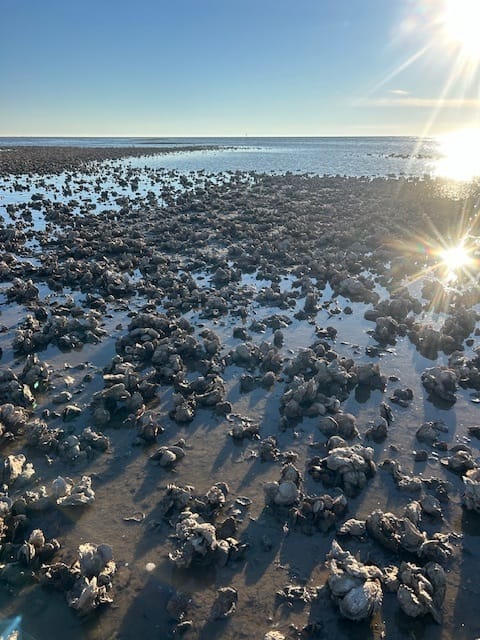
Living breakwaters and reefs that can grow with the tide
A NOAA-backed assessment of oyster-reef restoration projects reported that in some sites, reefs reduced wave energy by as much as 76–99%, effectively functioning as natural breakwaters.
Source: https://www.oyster-restoration.org/wp-content/uploads/2013/02/oyster-restoration-study-kroeger.pdf
Multiple studies consistently show that fringing oyster reefs reduce wave height by 30–50% in shallow waters (~0.5–1.0 m deep).
Source: https://www.esvaplan.org/wp-content/uploads/2022/03/Wiberg2018E_C_WaveAttenuationByOysterReefs.pdf?
Economic Benefits and Costs of Living Reefs
A harvested reef produces market oysters, but harvest has a real nonmarket cost that is often not considered. This cost is large, and a good reason to move dredge pressure onto farms and leases and off of public reefs.
A restored sanctuary reef’s value is filtration and nursery habitat, on the order of tens of thousands of dollars per acre over 20 years in their accounting, and that does not include tourism, birds, sea grass, or cultural heritage.
A living shoreline can be the highest-value acre if it actually stops erosion, because replacing a bulkhead is so expensive.
Source: https://repository.library.noaa.gov/view/noaa/49115/noaa_49115_DS1.pdf
A study published in Nature on oyster reef growth found that vertical reef accretion rates match local sea-level rise when emergence exposure is between 20–40% — showing oyster reefs can indeed grow vertically at ~0.3 to 0.5 cm per year, helping them keep pace with rising tides.
Texas at a Tipping Point
Historic declines reaching a tipping point: Oyster reefs are one of the most threatened marine habitats on Earth – an estimated 85% of oyster reefs have been lost globally.
- Galveston Bay has collapsed; dredging now pushes south, threatening Matagorda, Aransas, and Copano Bays next.
- Without immediate action, Texas faces functional extinction of its oyster reefs like Chesapeake Bay, which lost 98% of its oyster reefs.
- Oyster reefs are Texas’ first line of defense: when they fail, shoreline erosion accelerates and salt water marshes disappear.
- Every year of inaction means more lost acres, higher costs, and less chance of recovery.
Texas bays mirror this trend of diminished oyster reefs
Decades of overharvest and environmental stress have depleted our reefs to the brink: Since the 2022–2023 season, almost all Texas public oyster reefs were closed to harvesting because oyster stocks were too low to be sustainable.
This year was similar with only 2 more opened:
Source: https://tpwd.texas.gov/newsmedia/releases/?req=20241017b
In fall 2023, surveys found only one harvestable reef area in Galveston Bay, with most reefs showing alarmingly low oyster counts.
Storms show how thin the margin for failure is
Recent events underscore how vulnerable the system is. Hurricane Harvey (2017) inundated Galveston Bay with record rainfall, turning the bay’s water fresh, and oyster mortality jumped from ~11% to 48% bay-wide after the storm.
How reefs are being taken apart
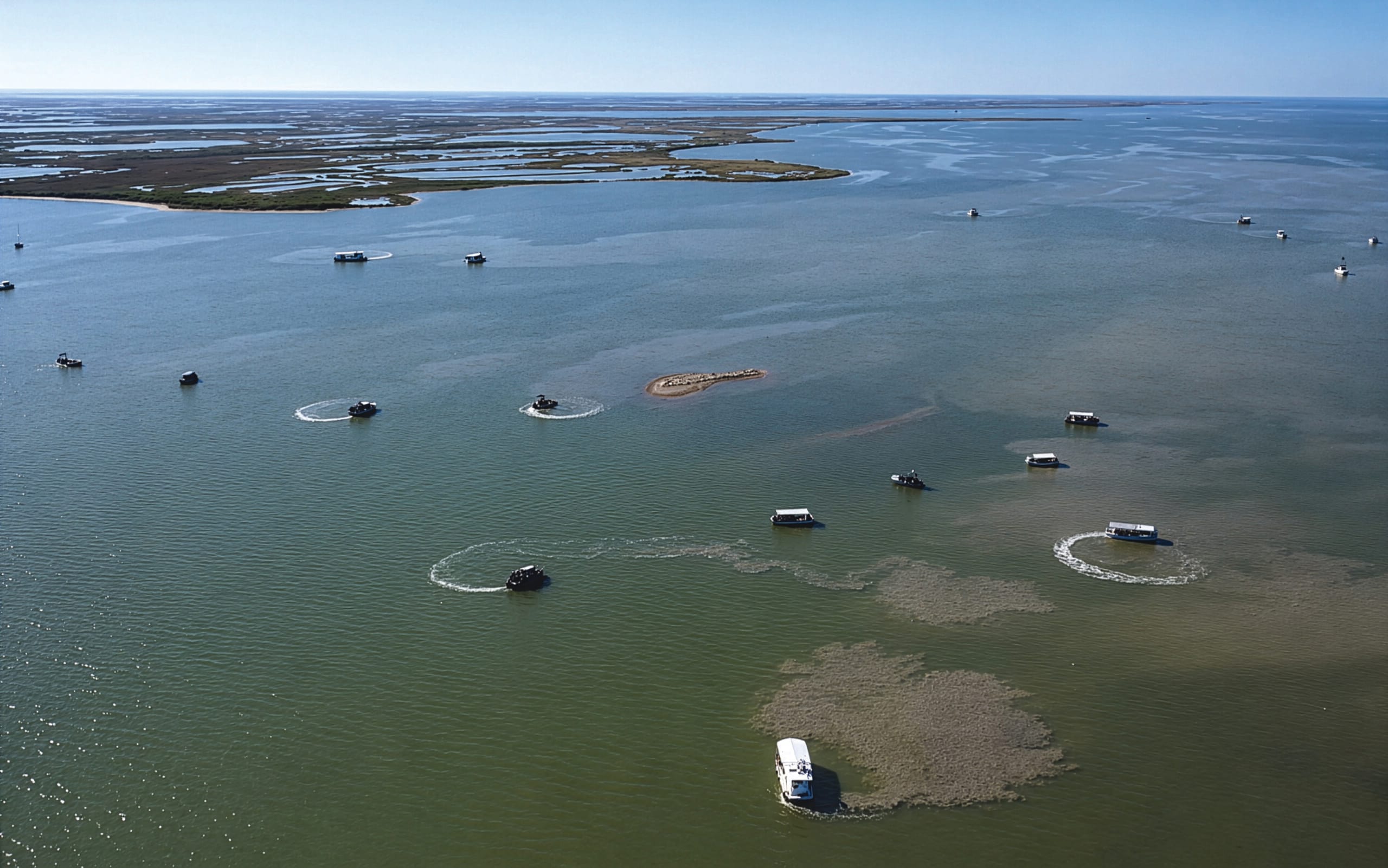
Destructive dredging removes not only market oysters but the shell architecture the next generation needs to settle. Aerial and satellite imagery of southwest Mesquite Bay and Aransas Bay shows boats converging on remaining reefs and the mud plumes and circular dredge scars they leave behind. That lost structure is the same structure that once broke waves, held marsh edges, and filtered the bay.
Image notes for developer: oyster dredge close-ups; oyster boats converging on SW Mesquite Bay (28.131808°, −96.871342°, courtesy of FlatsWorthy); Apple satellite images of mud plumes and reef destruction in Aransas Bay, 2025.
Habitats that power ecosystems and the Texas economy
Oysters are prolific filter feeders. One adult oyster can filter up to 50 gallons of water per day, straining out algae, nitrogen, and silt.
A restored reef of 178 acres in Galveston Bay is estimated to filter about 360 million gallons of water each day – which actually exceeds the 252 million gallons per day output of Houston’s 39 municipal wastewater plants.
This natural filtration improves water clarity and quality, helping prevent algal blooms by removing excess nutrients.
Rising water, costly storms, property at risk
The Texas coast already faces frequent and costly natural disasters – a trend expected to worsen. NOAA reports that Texas has been hit by 61 separate billion-dollar disaster events just since 2018.
Source: https://coast.noaa.gov/states/texas.html#:~:text=Coastal%20Hazards
The latest projections for Texas estimate roughly 10 to 12 inches of sea level rise by 2050 (relative to year 2000).
As seas rise and erosion continues, enormous amounts of coastal property are in jeopardy. By 2030, an estimated $20.9 billion worth of Texas coastal property is likely to be flooded by high tides (i.e. subject to chronic inundation). By 2050, the value of property below mean high tide (essentially lost to the sea) is projected to grow to nearly $30 billion.
What restoration costs - oysters compared with walls
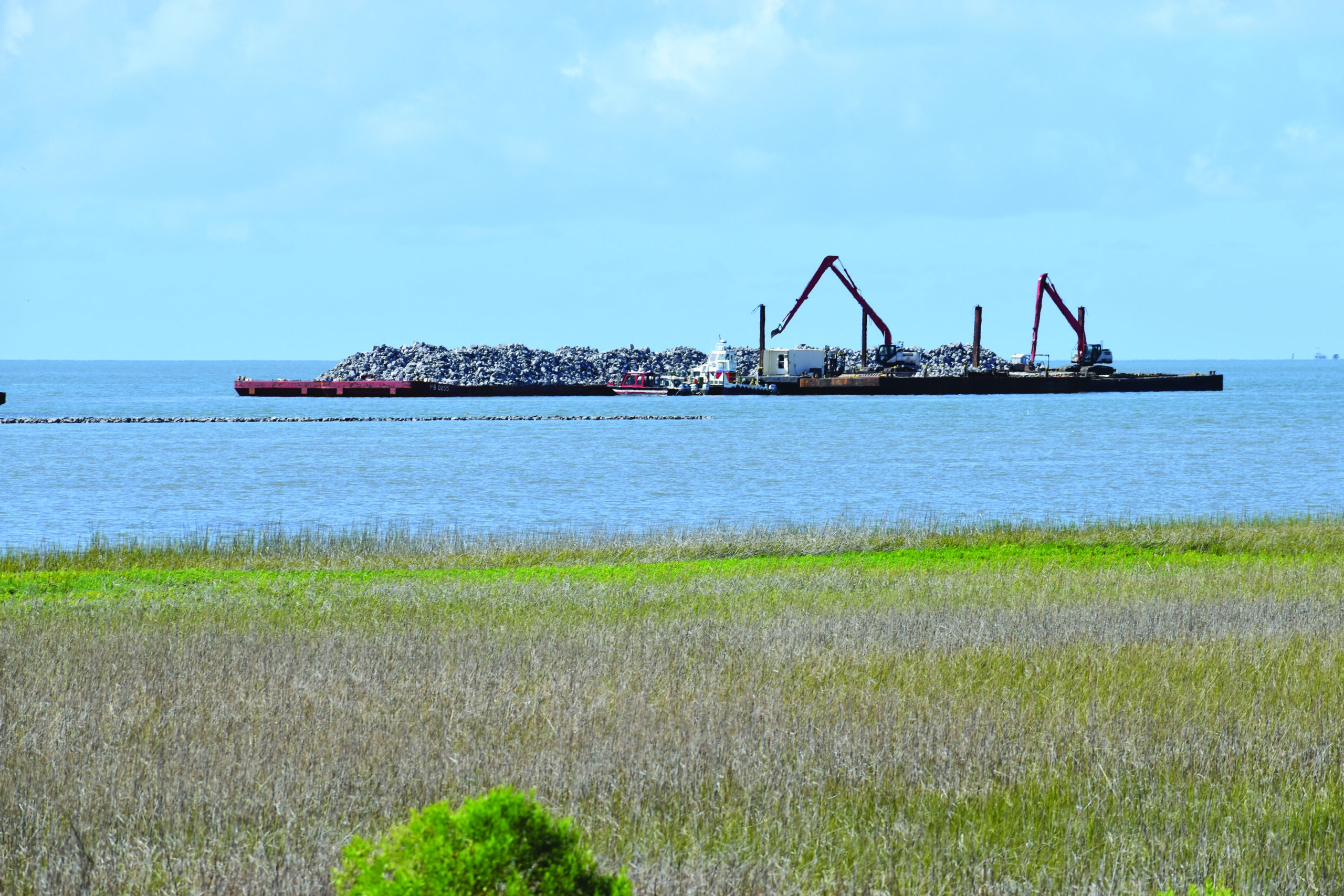
NOAA’s Nature-Based Solutions guide reports oyster reef restoration typically costs $203–$386 per linear foot (~$1.3 million per mile).
More detailed cost data from coastal restoration projects indicates average costs of $965,000 per acre, with a median cost of $421,500 per acre.
Source: https://coast.noaa.gov/data/digitalcoast/pdf/nature-based-solutions-installation-maintenance.pdf
Seawall costs vary by material, but the average per meter for artificial seawalls is about $5820.
Source: https://repository.library.noaa.gov/view/noaa/49248/noaa_49248_DS1.pdf
What’s Working in Texas
The tide is turning for Texas oyster reefs. Thank you and congratulations to all who contributed to these successful efforts.
Protect Texas reefs
In 2025 retired 112 oyster fishing licenses (20% of fleet) with TPWF’s S. Reed Morian Oyster License Buyback Program
In 2025 revived Texas Private Leasing Program (Certificate of Location Program)

121 applications received → 7K new acres of COL leases, enticing to commercial oyster operators for sustainable production
Restore reefs to Texas waters
Mesquite Bay Complex declared permanent sanctuary Nov. 2023
15 target projects identified for Galveston, Coastal Bend and Matagorda Bays
Support Texas farmers
6 legislative wins for Texas Oyster Mariculture Initiative
- Includes support for restaurants to serve Texas farmed oysters
- Assists farmers with technical oyster farming challenges
Partner organizations in Restoration
Conservation organizations positively impacting Texas bay ecosystems:
CCA Texas • Coastal Bend Bays & Estuaries Program • FlatsWorthy • Galveston Bay Foundation • Gulf Trust • Harte Research Institute, Texas A&M • University Corpus Christi • Matagorda Bay Foundation • Palacios Marine Agriculture Research • Texas A&M University at Galveston • Texas General Land Office • Texas Oyster Mariculture Association • Texas Parks & Wildlife Department • Texas Parks & Wildlife Foundation • The Artist Boat • The Nature Conservancy • The University of Houston – Clear Lake • The University of Texas Marine Science • Institute, Mission Aransas • And other conservation organizations as well as local, state and federal government agencies working to protect and restore our Texas coastlines.
Complete paper and source list
TPWD 2011 — ecological benefits / Galveston filtration comparison
Saving Seafood — oyster reef restoration helps the economy / nutrient removal
Kroeger oyster restoration study — wave energy reduced 76–99% at some sites
https://www.oyster-restoration.org/wp-content/uploads/2013/02/oyster-restoration-study-kroeger.pdf
Wiberg 2018 — wave attenuation by oyster reefs (30–50% wave-height reduction)
https://www.esvaplan.org/wp-content/uploads/2022/03/Wiberg2018E_C_WaveAttenuationByOysterReefs.pdf?
NOAA — economic benefit of oyster reefs
https://repository.library.noaa.gov/view/noaa/49115/noaa_49115_DS1.pdf
Nature — vertical reef accretion can match local sea-level rise
https://www.nature.com/articles/srep14785/
NOAA Nature-Based Solutions installation and maintenance (restoration costs)
https://coast.noaa.gov/data/digitalcoast/pdf/nature-based-solutions-installation-maintenance.pdf
NOAA repository — cost of artificial seawalls
https://repository.library.noaa.gov/view/noaa/49248/noaa_49248_DS1.pdf
Texas Highways — restoring Gulf Coast barrier reefs (quotes Jennifer)
Texas Tribune — public reef closures / jobs at stake
Texas Tribune — only one harvestable Galveston reef area in fall 2023
TPWD 2024 — limited public reef openings (only 2 more opened)
https://tpwd.texas.gov/newsmedia/releases/?req=20241017b
ScienceDirect — Hurricane Harvey freshwater pulse and oyster mortality
Texas Ports Association economic impact study
https://www.texasports.org/post/texas-ports-association-release-economic-impact-study
Texas Comptroller — Gulf Coast regional GDP
TxDOT — Texas maritime ports
https://www.txdot.gov/discover/texas-maritime-ports.html
Refining capacity along the Texas Gulf Coast
Texas Sea Grant / NOAA repository — fisheries and coastal agriculture context
NOAA — Texas coastal hazards (61 billion-dollar disasters since 2018)
https://coast.noaa.gov/states/texas.html#:~:text=Coastal%20Hazards
Meadows Center — Texas sea-level rise dashboard
Houston Press — coastal property at risk from chronic inundation
USGS publications warehouse (original citation as provided)
https://pubs.usgs.gov/fs/fs-110-02/pdf/FS_110-02.pdf
USGS publications warehouse (original citation repeated as provided)
Companion USGS paper — Galveston Pier 21 subsidence and relative sea-level rise
Texas General Land Office — coastal erosion overview
https://www.glo.texas.gov/coastal/protecting-coast/coastal-erosion