
Vision
Photo by Mac Ellio
A Partnership for Recovery
Oyster reef restoration in Texas is still viable because the biology, science, and expertise are already in place. Oyster larvae still exist in the bays. Restoration methods are proven, with public awareness growing and industry knowledge ready to be applied. The tools for strategic restoration are improving across Texas bays. What is missing are scale, speed, and a long-term coordinated commitment to place, people, wildlife, working water, local communities, and the generations that follow.The majority of reef restoration thus far has been funded by government programs, with important work also advanced by nonprofits, conservation organizations, and community partners across the coast. To meet the scale of need, Texas must increase philanthropic and corporate investment to accelerate strategic restorations across coastal bays. Texas has a unique opportunity to chart the future of our coastal bays. CPR seeks to bolster work underway and deliver new projects with public and private partners across Texas. We bring singular focus, a state-wide strategy and portfolio, and new participants. Texas comes together at the coast. Let’s come together and build a legacy. CPR seeks to raise $50M in five years to leverage additional public and private funds and, together with partners, deliver 2,500 acres of strategic reef restoration. This equals 30% of the 8,000-acre vision for restoration that CPR has for Texas and would be a major step toward large-scale coastal recovery.
Texas Oysters Mean Business
Oysters are one of the clearest examples of where conservation and commerce come together. A healthy oyster system delivers substantial ecological benefits while supporting Texas businesses, local jobs, seafood production, and coastal tourism.
The Texas coast is ecological, cultural, and economic infrastructure. It supports fisheries, recreation, tourism, agriculture, energy, working communities, and local businesses. Healthy bays are part of the foundation
that allows those systems to function and the places where Texans build memories across generations. Oysters are one of the clearest examples of where conservation and
commerce come together. A healthy oyster system delivers substantial ecological benefits while supporting Texas businesses, local jobs, seafood production, and coastal tourism. Visitors come to the Texas coast to
fish, hunt, bird watch, boat, and enjoy the beaches and bays, all of which depend on healthy bays anchored by living reefs. When reefs decline, Texas not only loses habitat, it loses productive capacity, economic strength,
and a living part of coastal tradition.
Investment in oyster reef restoration is not only an environmental decision, it is an investment in the long-term strength of Texas bays, coastal communities, and the Gulf economy. The longer restoration is delayed,
the more expensive and difficult recovery becomes.
Coastal Preservation & Restoration
From beaches to bays, the coast is where Texans gather, heal, fish, bird, remember, and connect. Supporting CPR is a way for corporate and philanthropic partners to invest in something practical, visible, and lasting. It combines data, science, ROI, urgency, scale, and speed with a deeply human case for protecting place while action can still shape the outcome.
Photo by Keith Miears
Future Vision of a Living Infrastructure
Unlike many constructed assets, a successful reef requires no maintenance and grows more efficient and valuable over time as the living system strengthens. This is why restoration belongs in a broader conversation about the future of Texas. The coast is not only a place people visit. It is a living system that supports jobs, food, recreation, commerce, energy, wildlife, culture, and public life.
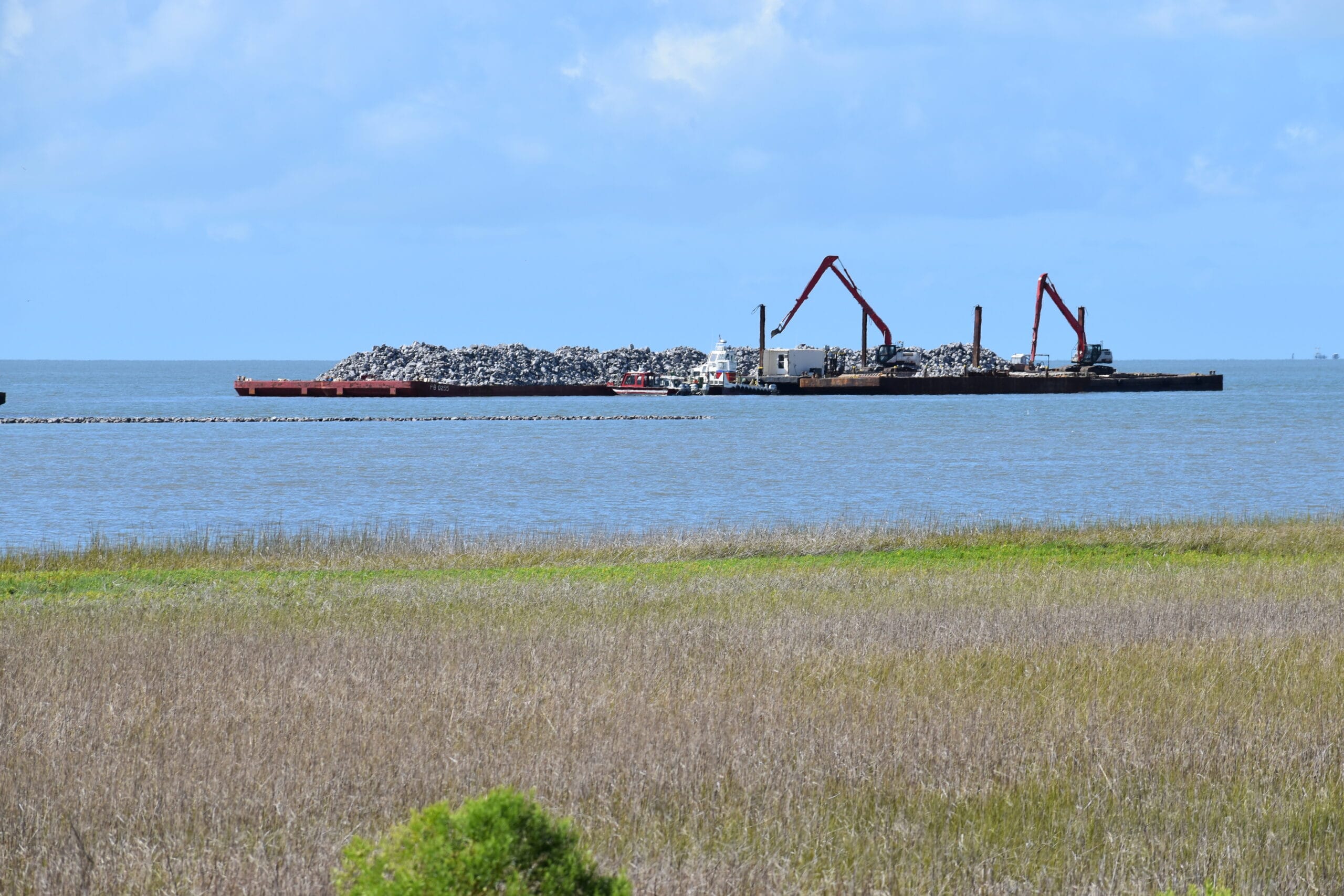
Photo by Freese and Nichols, Courtesy of Hasty and Sis Johnson and Matagorda Bay Foundation
Photo by Keith Miears